
The BSNL WiMAX tender has been cancelled. According to telecoms.com sources, India’s state-owned fixed and mobile operator is now looking at putting in place new terms and conditions for another tender.
The original tender was dogged by controversy with BSNL facing allegations of non-transparency in the bidding process to select its WiMAX franchisee partners.
More than 20 companies made a bid earlier this year to act as a WiMAX partner to BSNL in a number of ‘circles’ (or regions) across India. Five of the companies believed to have made the BSNL shortlist, however, were said to be ‘fake’ in that they were not really individual entities at all. Each, for example, had identical corporate details, including the same date of incorporation and even the same email contact address. The five companies in question were: WiExpert Communications, SV Telecom Systems, Digitelco Communications, Spectrus Communications and Technotial Infoways.
Moreover, according to local reports, each of the five companies was floated by Sanjay Kapoor, who is said to be a ‘confidant’ of A. Raja. Raja was India’s telecoms minister prior to the country’s federal elections last month. The five companies were also believed to be staffed, in part, by relatives of Kapoor.
Kuldeep Goyal, CMD of publicly-owned BSNL, announced last month that the WiMAX franchisee tender was still under evaluation by the original designated panel. “There is therefore no question of any allocation to any franchisee yet,” he said. “The panel will examine all aspects before selecting the franchisees and if there is found to be any discrepancy it will be taken care of. We will maintain [the] highest standard of transparency.”
But Goyal’s reassurances failed to quell the controversy surrounding the tender. There is also some speculation that the abolition of the WiMAX tender would be a necessary pre-conditions if Raja were to resume his role as telecoms minister.
BSNL is already using US-headquartered Soma Networks as a Mobile WiMAX franchisee in the three lucrative circles of Gujarat, Maharashtra (including Goa) and Andhra Pradesh. Under the franchise arrangement, Soma pays for the WiMAX kit in exchange for access to BSNL infrastructure (such as tower sites and backhaul facilities) and a revenue-sharing deal on WiMAX services. Soma struck a 70-30 revenue sharing deal with BSNL in the kit-maker’s favour, although BSNL is reportedly considering a 75-25 revenue-sharing arrangement with franchisees in other circles.
In February this year, Soma and BSNL launched their WiMAX services in Ahmedabad, Gujarat, and has reportedly acquired more 1,000 customers in the enterprise segment.
Critics of the Soma award point out that BSNL did not issue a tender or EOI (expressions of interest) in the three circles Soma won its WIMAX concession. Soma, meanwhile, has put in a bid to act as WiMAX franchisee in other regions as part of the BSNL tender.
BSNL has a 20MHz chunk of pan-Indian BWA (broadband wireless access) spectrum in the 2.5GHz frequency band. Unlike privately-owned operators, state-owned BSNL (and MTNL) does not have to wait until the BWA auctions take place before launching commercial service. While the BWA spectrum auctions are not expected to take place until the end of this year at the earliest, the controversy surrounding the BSNL WIMAX tender means the state-owned operator’s time-to-market WIMAX advantage has diminished.
A total of 40MHz of spectrum in 2.5GHz and 40MHz in 2.3GHz band is to be made available for BWA deployment-frequency bands to which the WiMAX Forum, along with 3.5GHz, has developed global standards for WiMAX equipment.
Although 20MHz has already been put aside for state operators at 2.5GHz, another three private operators are allowed to bid for a total of 20MHz each in the remaining 60MHz of BWA spectrum made available. BSNL and MTNL have to match the highest winning bid of the three BWA licence holders to pay for their spectrum.


 New York - Microsoft, the world's largest software maker, and Nokia, the biggest mobile phone maker globally, were to announce a partnership Wednesday that would enable Microsoft Office to run on Nokia phones, US media reports said.
 Berlin - Windows 7 won't be available in stores until October 22, but Microsoft has already announced various pre-ordering options for the replacement to Vista. To lure users into making the jump, the company is promising that anyone who buys a new computer now with Windows Vista versions Home Premium, Business, or Ultimate will receive a copy of Windows 7 in the fall. The offer is valid until January 31, 2010.
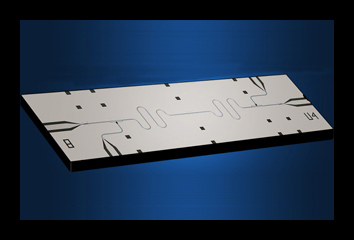 Washington, August 10 : Physicists at the National Institute of Standards and Technology (NIST), US, have demonstrated sustained, reliable information processing operations on electrically charged atoms (ions), thus raising prospects for building a practical quantum computer.


